

shouldertent > Resources > Blog > Five Key Questions You Must Ask Your Supplier Before Purchasing Industrial Warehouse Tents
Five Key Questions You Must Ask Your Supplier Before Purchasing Industrial Warehouse Tents
- Five Key Questions You Must Ask Your Supplier Before Purchasing Industrial Warehouse Tents
- Why Aluminum Commercial Pickleball Tents Are the Future of Sports Facilities
- The Ultimate Buyer’s Guide to Padel & Tennis Tents: Secrets to All-Weather Operation
- The Ultimate Guide to Choosing Outdoor Exhibition Tents
- Commercial Wedding Tents: A Buyer’s Guide to Styles, Costs, and Ownership
- How to Choose the Right Size Industrial Tent for Your Factory? (Buyer’s Guide)
- Storage Tents vs Permanent Buildings: Which Wins on Cost and Speed?
- Why Do Businesses Need Temporary Storage Tents?
- Choosing the Right Tent for Sports Events: A Comprehensive Guide
- Wedding Tent Case Study: A Romantic Outdoor Wedding with a 20′ x 40′ A-Shaped Tent
Table Of Contents
Populer Posts
- Back
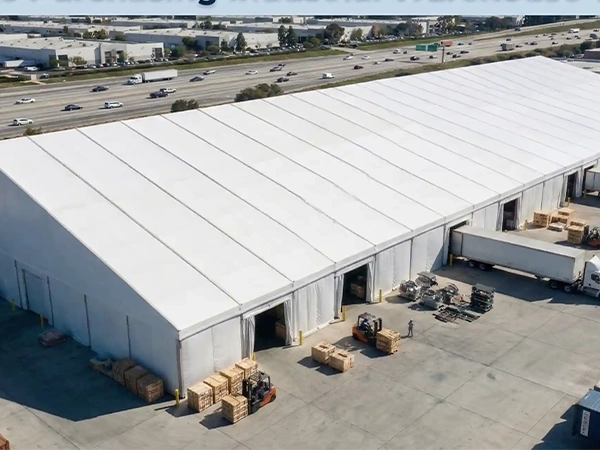
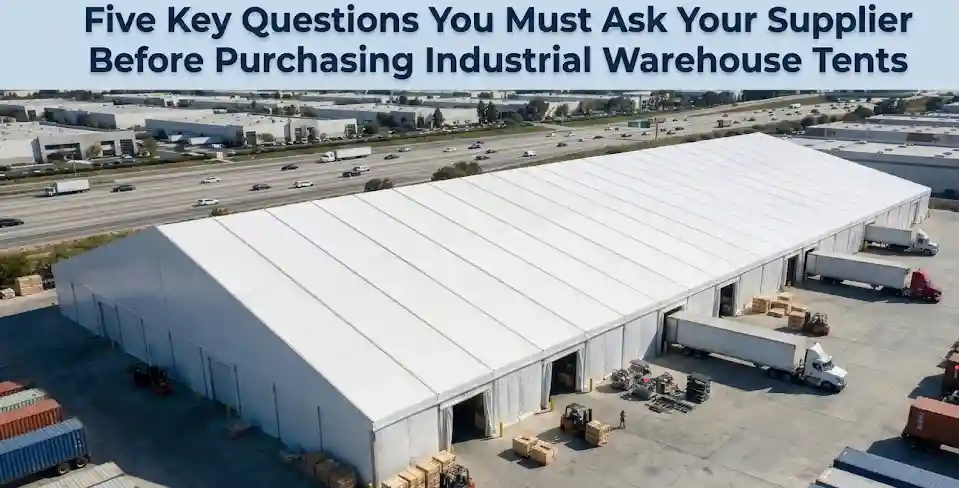
When your facility runs out of space, purchasing an external storage structure is a major capital expenditure (CAPEX). Uninformed buyers often get burned by brokers selling flimsy, uncertified structures masquerading as heavy-duty assets. You need a permanent-grade solution that protects your inventory, satisfies your CFO’s ROI requirements, and integrates seamlessly with your logistics flow.
Before investing in a big warehouse tent, you must verify the aluminum alloy grade (demand 6061-T6), require certified wind and snow load engineering reports, confirm the heavy-duty PVC fire rating (NFPA 701), ensure a true clear-span design for unrestricted forklift operations, and verify you are buying directly from the manufacturer. Asking these specific questions guarantees your capital expenditure yields a secure, decades-long asset.
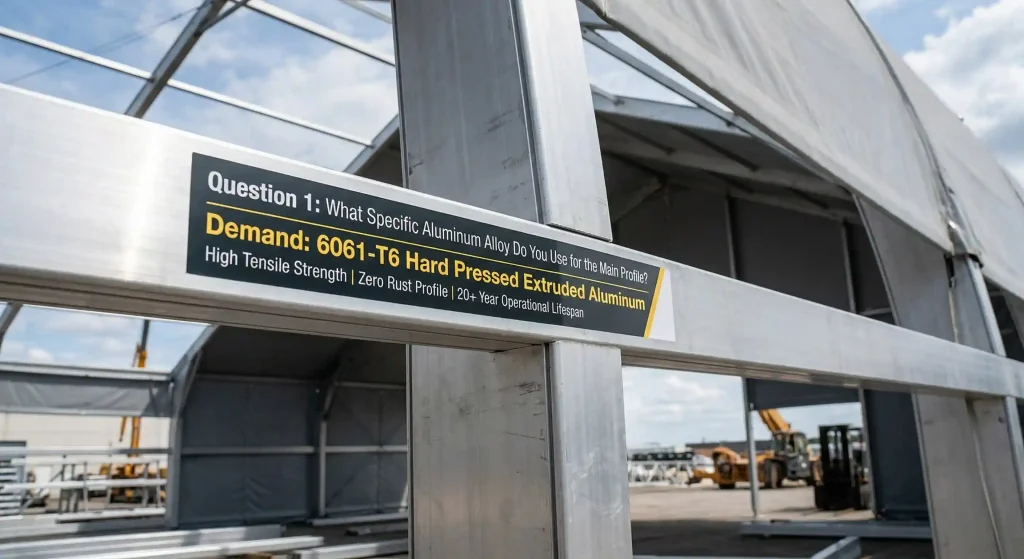
Question 1: "What Specific Aluminum Alloy Do You Use for the Main Profile?"
You are not buying a lightweight party canopy; you are investing in an industrial facility. Many suppliers cut corners by utilizing inferior, low-grade aluminum alloys that bend, warp, or suffer from shear failure under standard operational stress and heavy weather.
Why it matters
The structural integrity of your entire operation rests on the frame. You must demand 6061-T6 Hard Pressed Extruded Aluminum. This specific, high-grade alloy goes through a specialized tempering process, offering exceptionally high tensile strength while maintaining a zero-rust profile.
Why does this matter for your bottom line? A frame engineered entirely from 6061-T6 gives your warehouse tent a 20+ year operational lifespan without the structural degradation common in cheaper alternatives. It requires zero protective painting and eliminates the ongoing maintenance costs associated with rust and oxidation. When you ask this question, demand to see the raw material certificates. If the supplier stutters or offers a generic “high-quality aluminum” response, you are looking at a liability, not an asset.
Question 2: "Can You Provide Certified Wind Load Engineering Reports?"
Nature does not care about your inventory deadlines. Extreme weather events, high-velocity winds will quickly collapse an uncertified structure, leading to catastrophic inventory loss, massive insurance claims, and severe operational downtime.
Why it matters
Do not accept a supplier’s verbal promise that their structure is “heavy-duty” or “weatherproof.” Demand stamped, certified engineering reports. Legitimate manufacturers engineer their aluminum profiles and roof pitches to meet strict international structural standards based on dynamic load calculations.
This documentation proves the structure is mathematically engineered to withstand high wind speeds (often exceeding 80km/h) . You must know exactly how many kilograms per square meter the roof can hold before deflection occurs. These calculations dictate the exact thickness of the aluminum profile required for your specific geographic location.
Question 3: "What is the Exact Weight and Fire Rating of the PVC Fabric?"
The membrane protecting your goods is your first line of defense against severe weather, UV degradation, and industrial hazards. Thin, uncertified plastics tear easily under tension, degrade quickly in the sun, and pose massive fire risks to your supply chain.
Why it matters
Ask for the exact fabric specifications. You require 850g/sqm double-coated block-out PVC. This heavy industrial fabric is engineered with a blackout layer that blocks 100% of UV rays. This prevents the greenhouse effect, helps regulate internal temperatures for heat-sensitive inventory, and highly resists tearing or puncture from passing equipment.
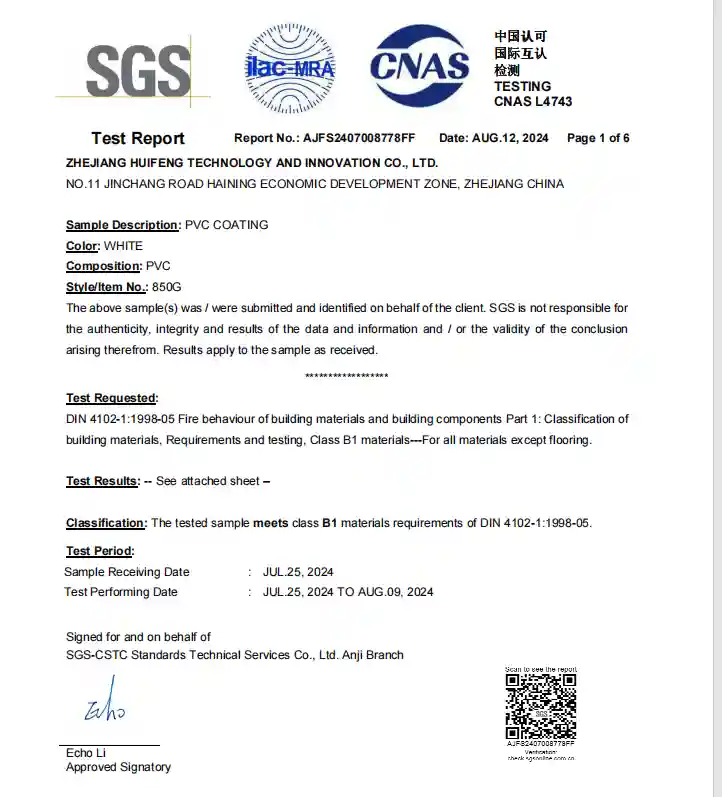
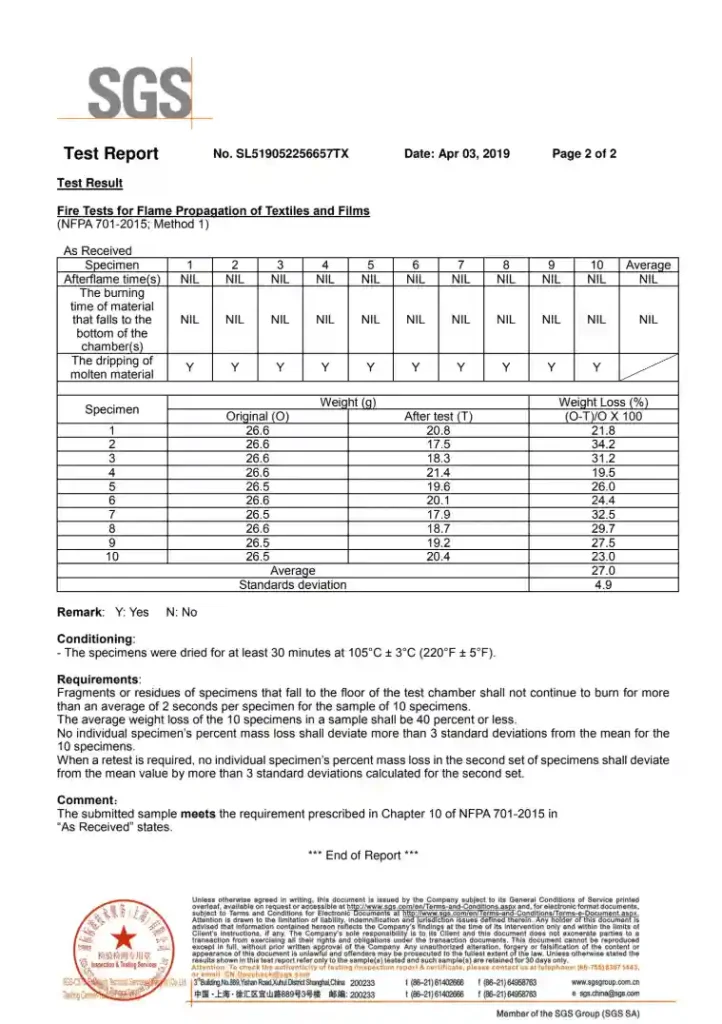
Just as importantly, industrial safety compliance requires this fabric to carry internationally recognized fire retardant certifications. Facilities storing cardboard packaging, chemicals, or dense palletized goods cannot risk an accelerated fire. Specify that the PVC membrane must meet NFPA 701 (US) or DIN 4102 B1 (European) standards. These materials are self-extinguishing, ensuring that your facility passes strict fire marshal inspections.
The following is the flame retardant test report for Shoulder Tent.
Question 4: "Is the Structure a 100% Clear Span Design?"
When evaluating a warehouse storage tent, your interior logistics dictate your ultimate return on investment. The way your material handling equipment navigates the space determines your daily throughput. A true clear-span design means there are absolutely zero internal support columns holding up the roof.
Why it matters
Center columns destroy your floor plan. They severely limit your forklift turning radii, disrupt high-density pallet racking layouts, and create permanent dead zones where inventory simply cannot be stored.
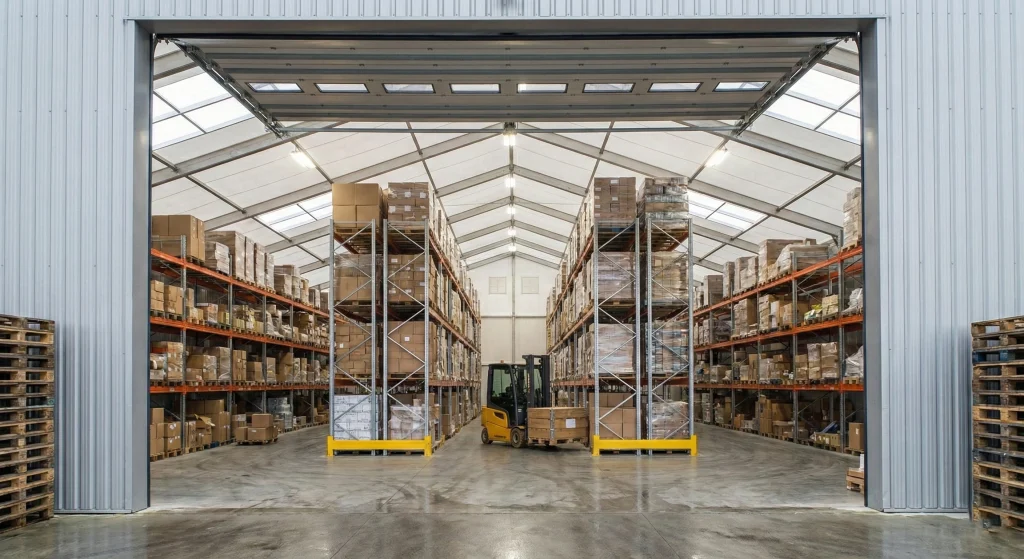
A 100% clear span big warehouse tent maximizes every single square inch of your purchased footprint. Whether you are operating standard counterbalanced forklifts or specialized reach trucks, your operators need unobstructed lanes. By demanding a clear-span architecture, you guarantee flexible, high-density storage and rapid material handling, allowing your warehouse managers to design the interior layout based purely on efficiency, rather than dodging structural obstacles.
Question 5: "Are You a Direct Manufacturer or a Trading Company?"
The industrial supply chain is heavily cluttered with middlemen, brokers, and trading companies. Buying your temporary warehouse tent from a third-party vendor inflates your capital expenditure and leaves you completely abandoned when you need after-sales support, modular expansions, or replacement parts.
Why it matters
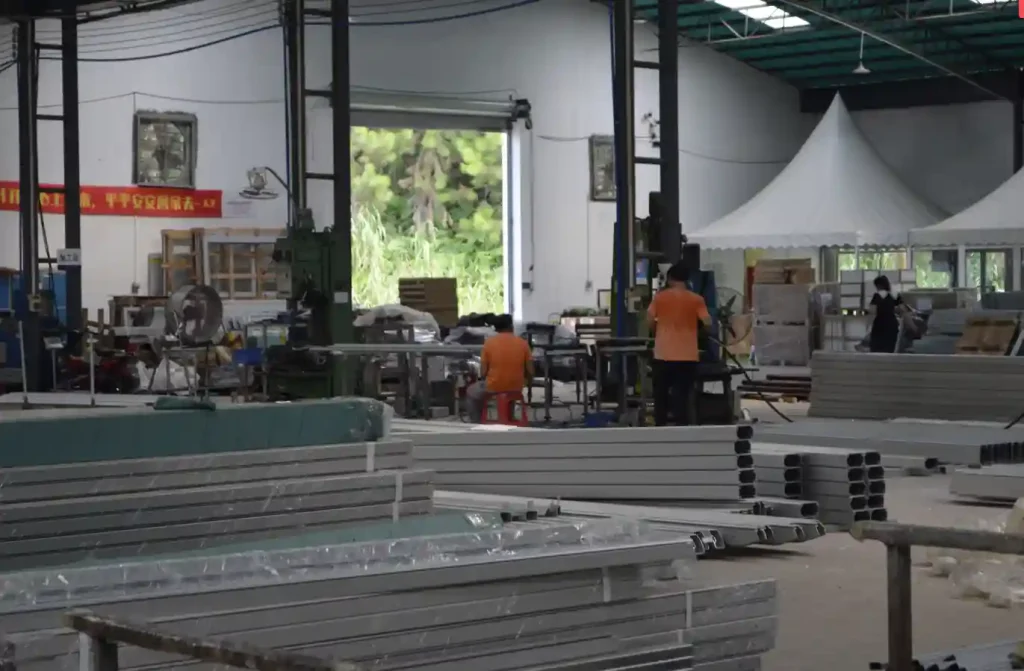
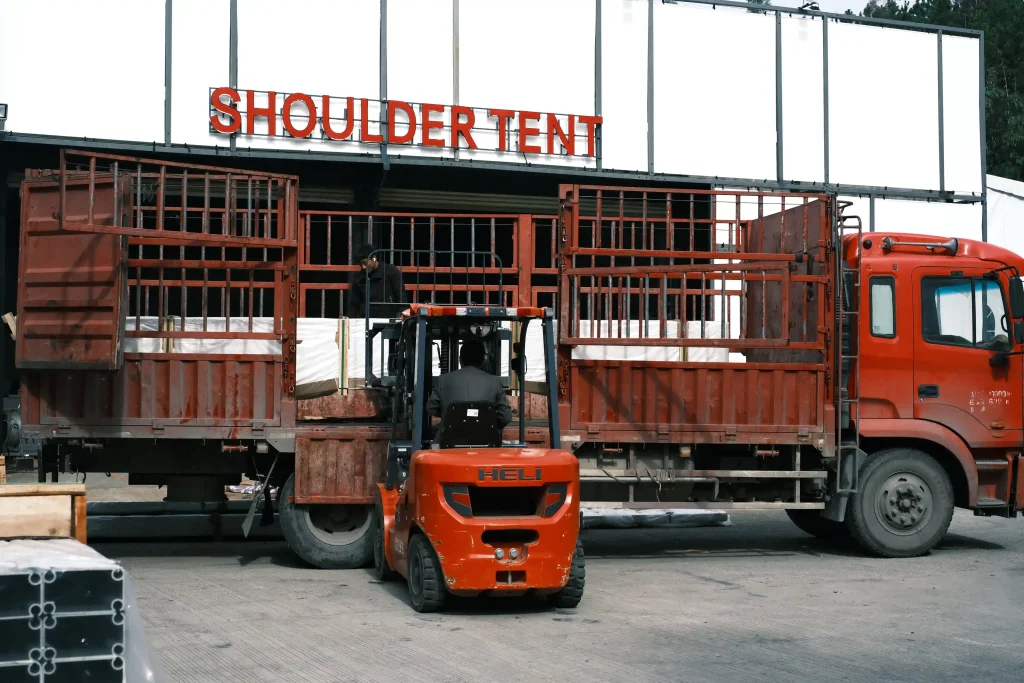
Ask if they physically own the factory floor and the extrusion machinery. A true direct manufacturer—like Shoulder Tent—controls the entire production process from raw material sourcing to final assembly. We utilize advanced CNC precision machining for our aluminum profiles, ensuring absolute accuracy at every connection point.
Furthermore, purchasing direct means we can offer custom engineering tailored to your site. Need a higher eave height to clear your specific rolling stock? Need a custom door placement for your loading docks? A trading company cannot adjust engineering drawings. Purchasing direct from Shoulder Tent guarantees factory-direct pricing, immediate engineering support, and full accountability over the lifespan of your asset.
The Buyer's Evaluation Matrix
Use this matrix to grade potential suppliers during your procurement process. Print this out and bring it to your next vendor meeting.
| The Procurement Question | Red Flag Answer (What to Avoid) | The Shoulder Tent Standard (What to Demand) |
|---|---|---|
| Alloy Grade? | We use a high-quality, lightweight aluminum blend. | 6061-T6 Hard Pressed Extruded Aluminum. Documented. |
| Engineering? | It holds up great in heavy storms. We have photos. | Certified structural engineering and wind compliance reports. |
| PVC Specs? | Standard heavy-duty waterproof plastic. | 850g/sqm block-out PVC, strictly NFPA 701 / DIN 4102 B1 rated. |
| Clear Span | It has a few support posts inside, but they are thin. | 100% Clear Span. Zero internal columns to block logistics. |
| Source? | We partner with top overseas factories to source parts. | Direct Manufacturer with in-house CNC machining and custom engineering. |
Ready to upgrade your logistics infrastructure?
If you are ready to expand your footprint with a highly engineered, permanent-grade asset, bypass the middlemen. Contact Shoulder Tent today to speak directly with our engineering and sales directors for a transparent, factory-direct quote tailored to your exact inventory needs.
FAQ
Q1:How long does a temporary warehouse tent actually last?
When engineered correctly, “temporary” only refers to its modularity and portability, not its physical lifespan. An industrial warehouse tent framed with 6061-T6 aluminum will last over 20 years in continuous operational use. The heavy-duty 850g/sqm PVC membrane typically lasts 10 to 15 years depending on direct UV exposure and can be easily replaced panel-by-panel without dismantling the primary frame.
Q2:Do I need to pour a permanent concrete foundation before purchasing?
Not always. While traditional brick-and-mortar buildings require months of extensive groundwork and massive foundation costs, a major financial advantage of buying an extruded aluminum structure is anchoring versatility. They can be securely anchored to existing asphalt, compacted earth, or existing concrete pads using specialized base plates and heavy-duty ground anchor systems. This bypasses massive site preparation costs and dramatically accelerates your deployment timeline.
Q3:Can I expand the size of the structure later if my inventory grows?
Yes, provided you purchase a highly engineered system. Shoulder Tent structures are modular by design, operating on 5-meter bay increments. If you purchase a 20x30m structure today, you can easily buy additional 5-meter bays next year to extend the length to 20x40m or 20x50m. A true manufacturer ensures absolute compatibility for future expansions.

chenyuanjiang
Chen Yuanjiang, Shoulder’s Marketing Specialist, combines expertise in digital marketing with strong technical skills. He develops integrated campaigns and provides clients with ready-to-use marketing toolkits, product pages, and promotional content to boost brand exposure and drive sales in global markets.
chenyuanjiang
Chen Yuanjiang, Shoulder’s Marketing Specialist, combines expertise in digital marketing with strong technical skills. He develops integrated campaigns and provides clients with ready-to-use marketing toolkits, product pages, and promotional content to boost brand exposure and drive sales in global markets.
Get a Quote